
Those Crazy Quilts

The National Route 66 Museum in Elk City, Oklahoma focuses on the people who lived, worked and traveled the “Mother Road”―offering visitors a classic walk through all eight states where Route 66 passes through (from Illinois to California). There are 18 buildings on-site where visitors learn stories of local history as well as American history.
With limited time for an in-depth tour of the entire property, I made sure to spend some time in the Victorian-era house that held displays and artifacts that celebrated the lives of the early settlers in Western Oklahoma.

The velvet Crazy Quilt was gently folded over the trunk, along with two other quilts on the foot of the antique spindle spool bed.

The toys in the bedroom were in good condition. I loved seeing the Raggedy Andy doll (pictured) in the chair in front of the window. An older Raggedy Ann doll was seated to the right (just out of this picture). And there was a quilt covering the twin bed in the corner of the display.
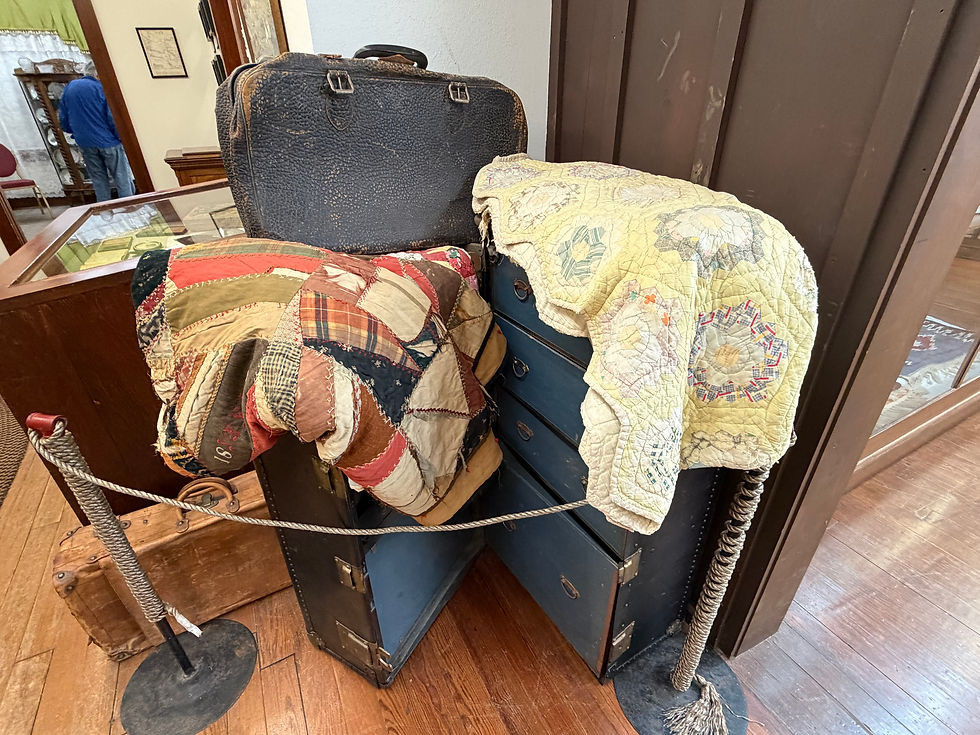
Luggage was tucked out of the way where two well-loved quilts were draped on top of an early steamer trunk wardrobe chest. The tattered Crazy Quilt and the faded Grandmother’s Flower Garden Quilt looked like they were placed to accompany someone packing for a trip.
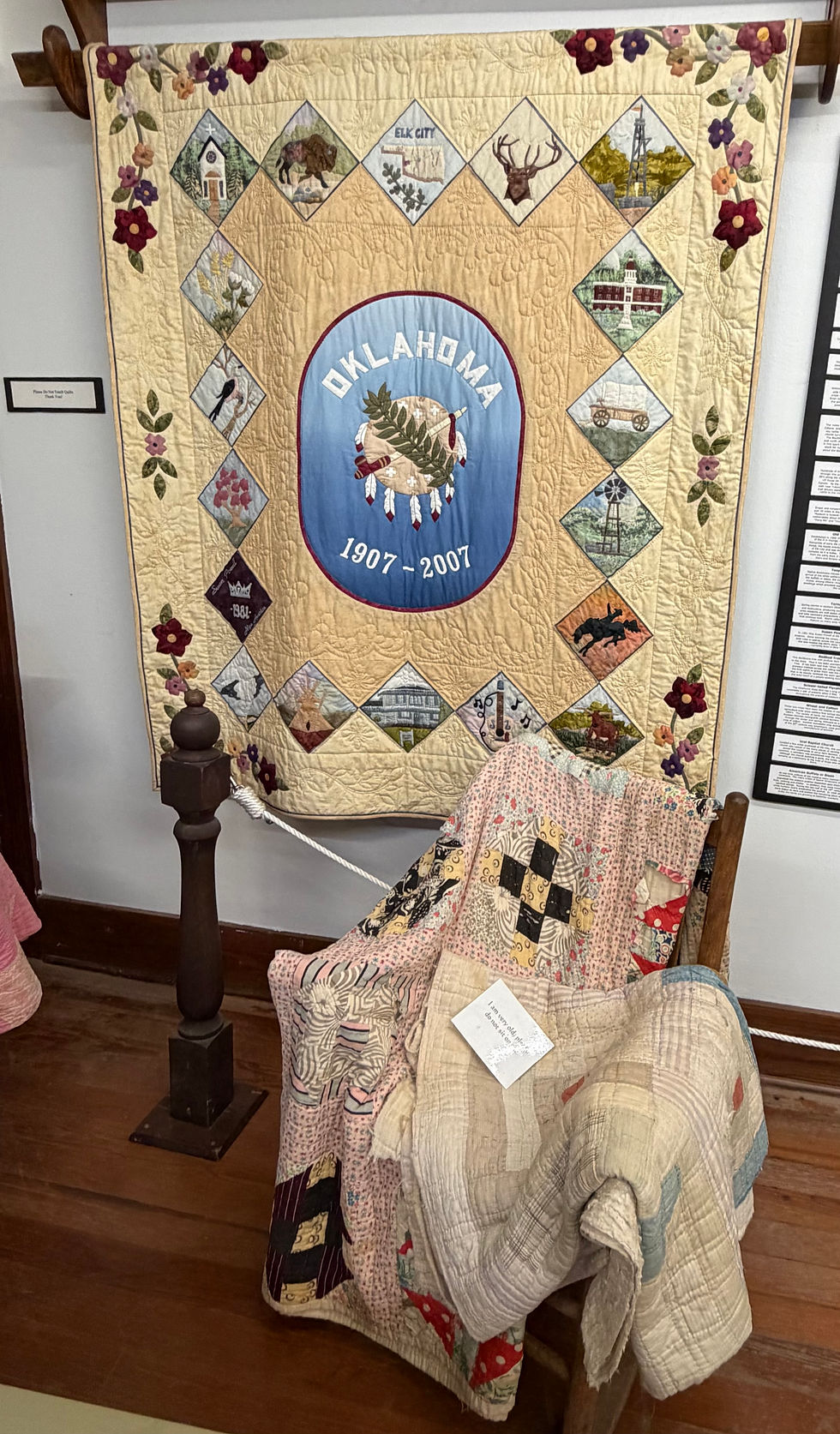
The collection of quilts included this artfully designed Oklahoma Centennial Quilt (1907-2007) that was prominently displayed. The center of the quilt features an Osage warrior’s war shield, calumet, or peace pipe and an olive branch―as seen on the Oklahoma State flag. Seven eagle feathers decorate the shield. The diamond-shaped quilt blocks represent various aspects of area and state history. Two additional quilts covered a small wooden rocking chair. The sign on the quilt reads “I am very old, please do not sit on me.”

The colorful “Memory Quilt” by Kay Bradford graced this corner vignette. The embroidered signatures, city, state, dates (1928-1934) and embellishments (flowers, baskets, and bows) appear to have been added after the hand quilting was completed.

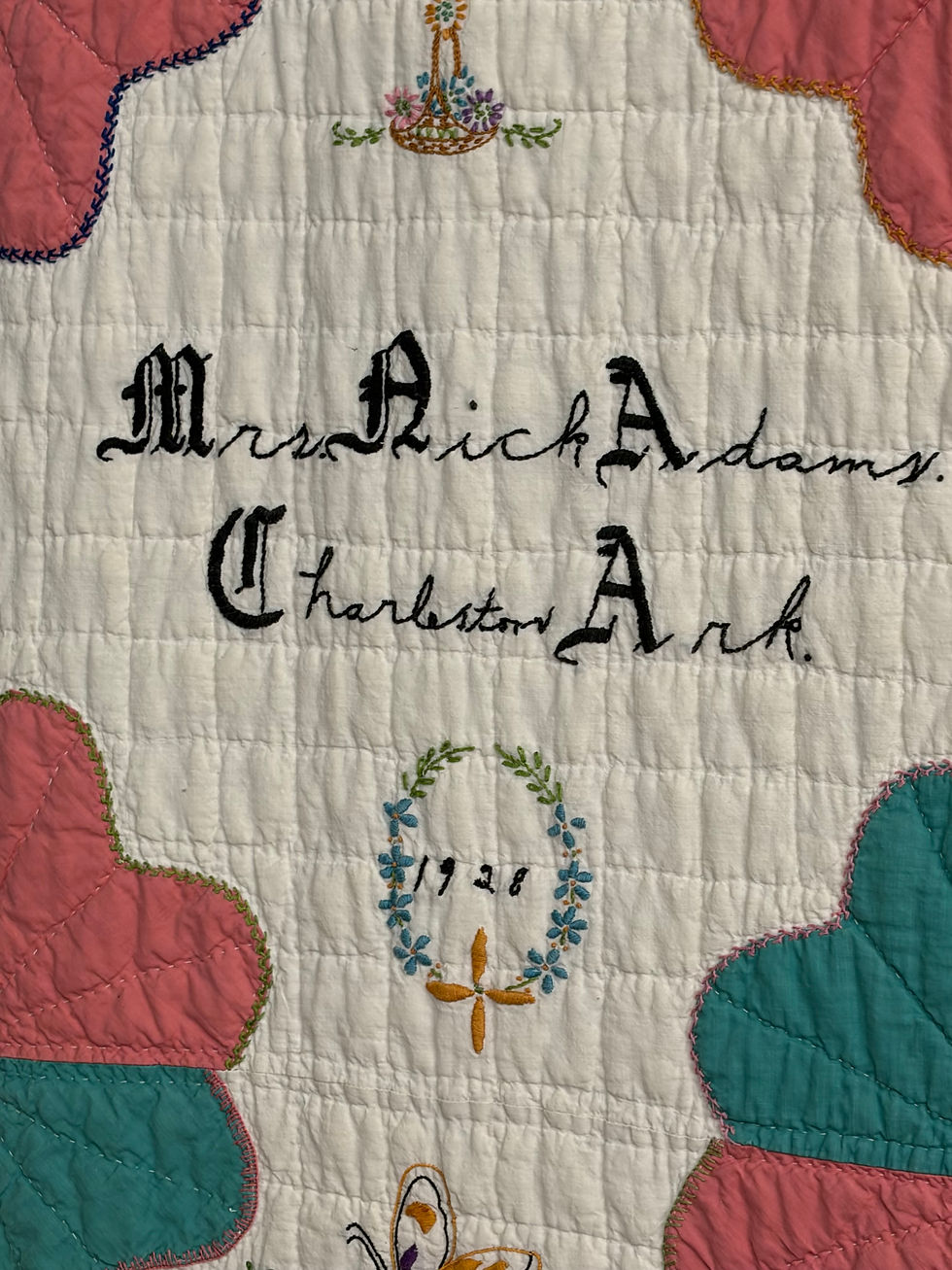
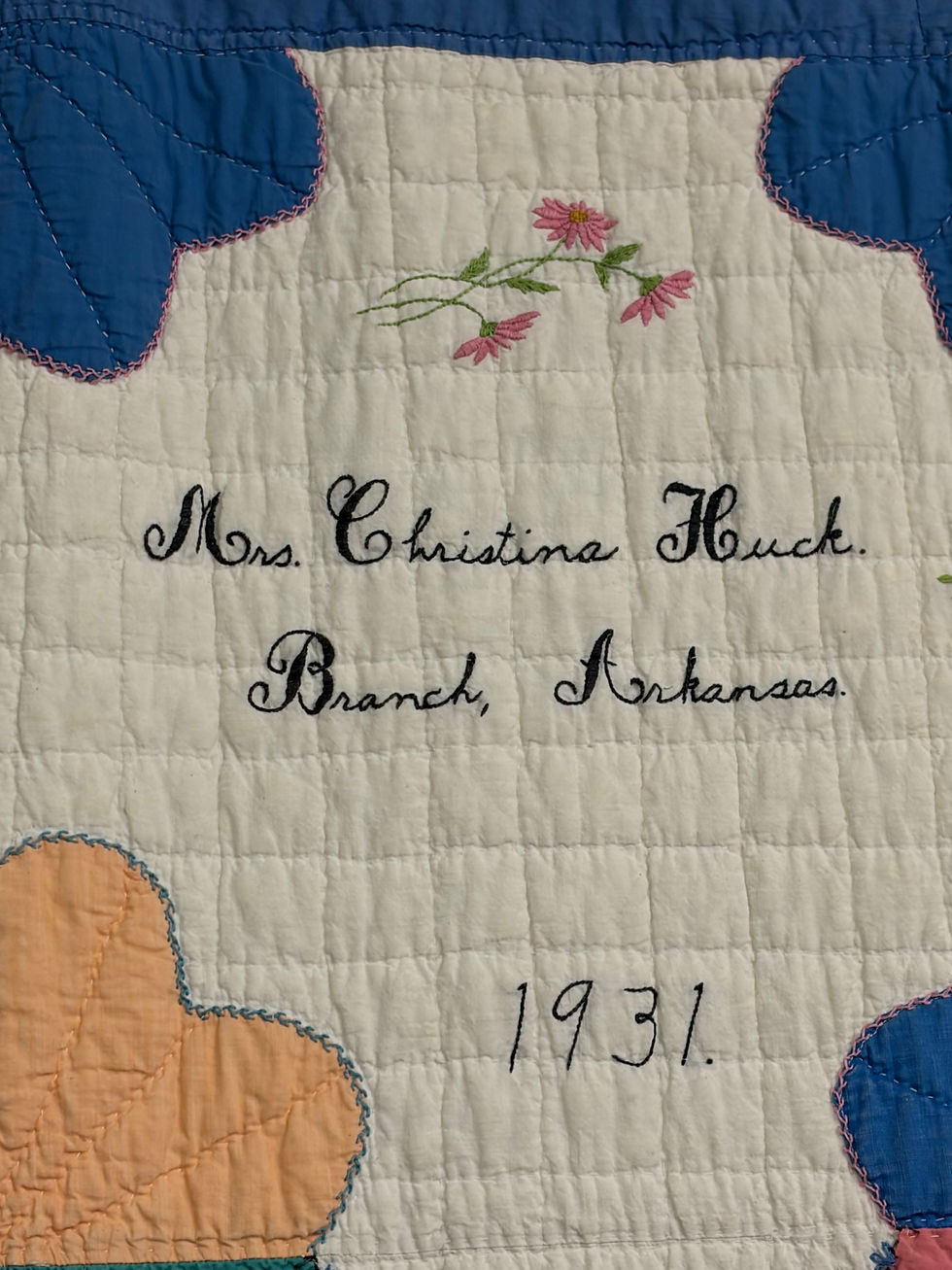
With a background in typesetting, I found it fascinating that a couple of the signatures used Old English Text for initial caps (the first letter of each word). The rest of the text was likely their cursive signature. These three had flowers embroidered above and a date highlighted below.


It might be difficult to find much information about the quilters without knowing their first names. Some have signed as Mrs. ‘husband’s first and last name’. It was common for women to sign quilts in this manner in the early 1900s. While challenging to trace their names today, census records using city, state and year, or community records can help identify the quilter.


Two blocks―Katie Mahl and Hester Rogers―provided the most complete information.

The other women knew who created this sweet block. And the recipient most assuredly recognizes the embroidered handwriting. Did you see the little ‘x’?

I mentioned the Barn Quilt over the museum's door in a previous blog post. From the Elk City, OK website: The museum features a vast collection of tools that were used in early farm and ranch life. A Blacksmith shop and windmill collection are among the exhibits depicting pioneer farmers and ranchers and their contributions to this nation.
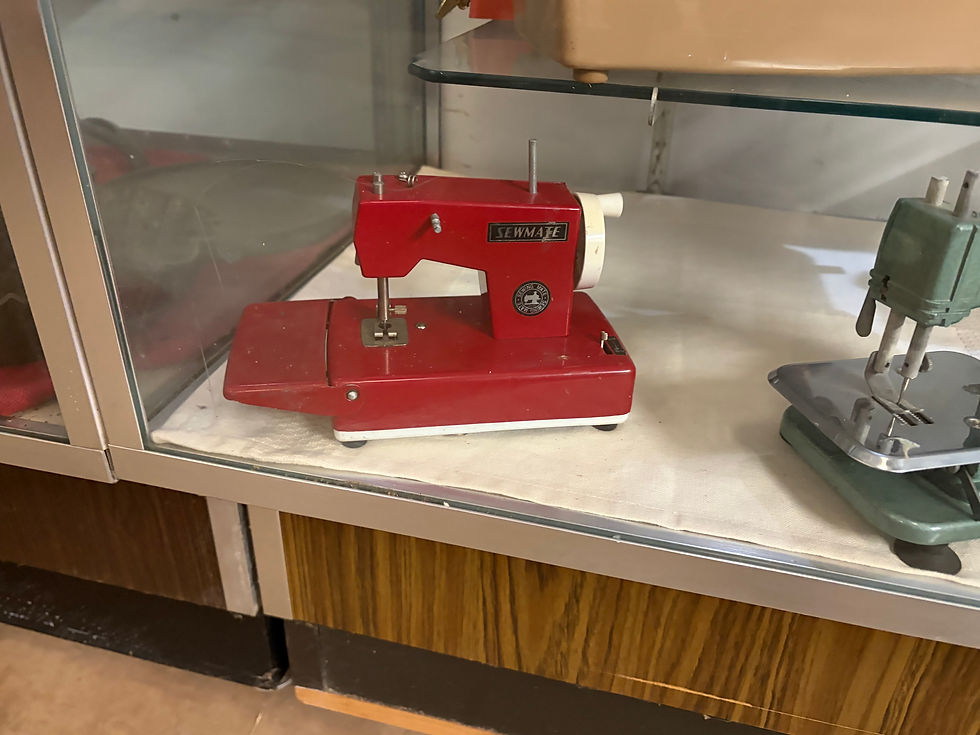


The Farm and Ranch building also displayed a miniature sewing machine collection (courtesy of Leah Smith, Leedy, OK), and a wooden ironing board highlighting six flat irons from the late 1880s to the early 1900s. Several irons were equipped with a detachable wooden handle so the user would ‘not burn the hand’.

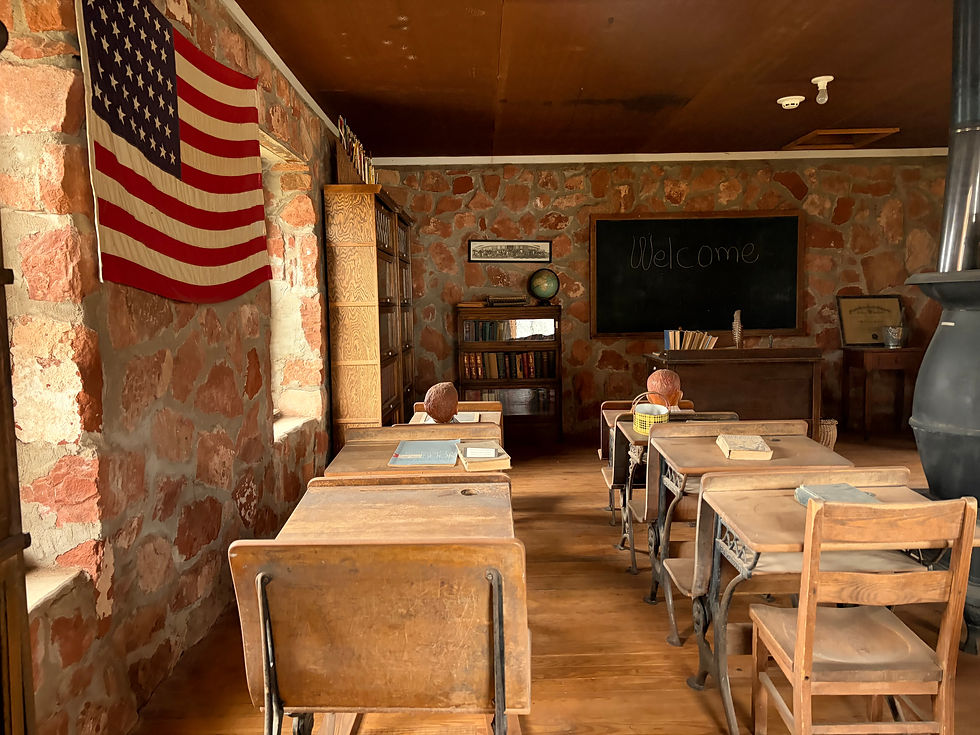


This video link shows the additional buildings on-site, featuring the Farm and Ranch Museum (Barn, Shed and Office) that celebrates Oklahoma’s agriculture heritage. The complex is also home to the Blacksmith Museum, including replicas of a schoolhouse, opera house, doctor’s office, and a chapel. It was well worth the time we spent there and we would love to go back.
"Our quilts were more than useful, they had the faint sentimentality of a pressed flower. And no more beauty. We did not value them for their appearance, but for the memories in them, for their good wearing qualities and the thrift they represented." ~Rose Wilder Lane
When talking with small business owners, staff and tourists as we traveled along the Mother Road, many shared that the bulk of visitors in recent years have been international travelers. Many were surprised that we were driving the entire route in our hot rod and cheered us on.


At the historic Ambler’s Texaco Gas Station (now a visitor center) in Dwight, Illinois, gas was pumped there for 66 continuous years. World maps were displayed with pushpins, and we were invited to mark our hometowns. Three in our small group were from Australia. From the United States; two were from the east coast, five from the west coast.
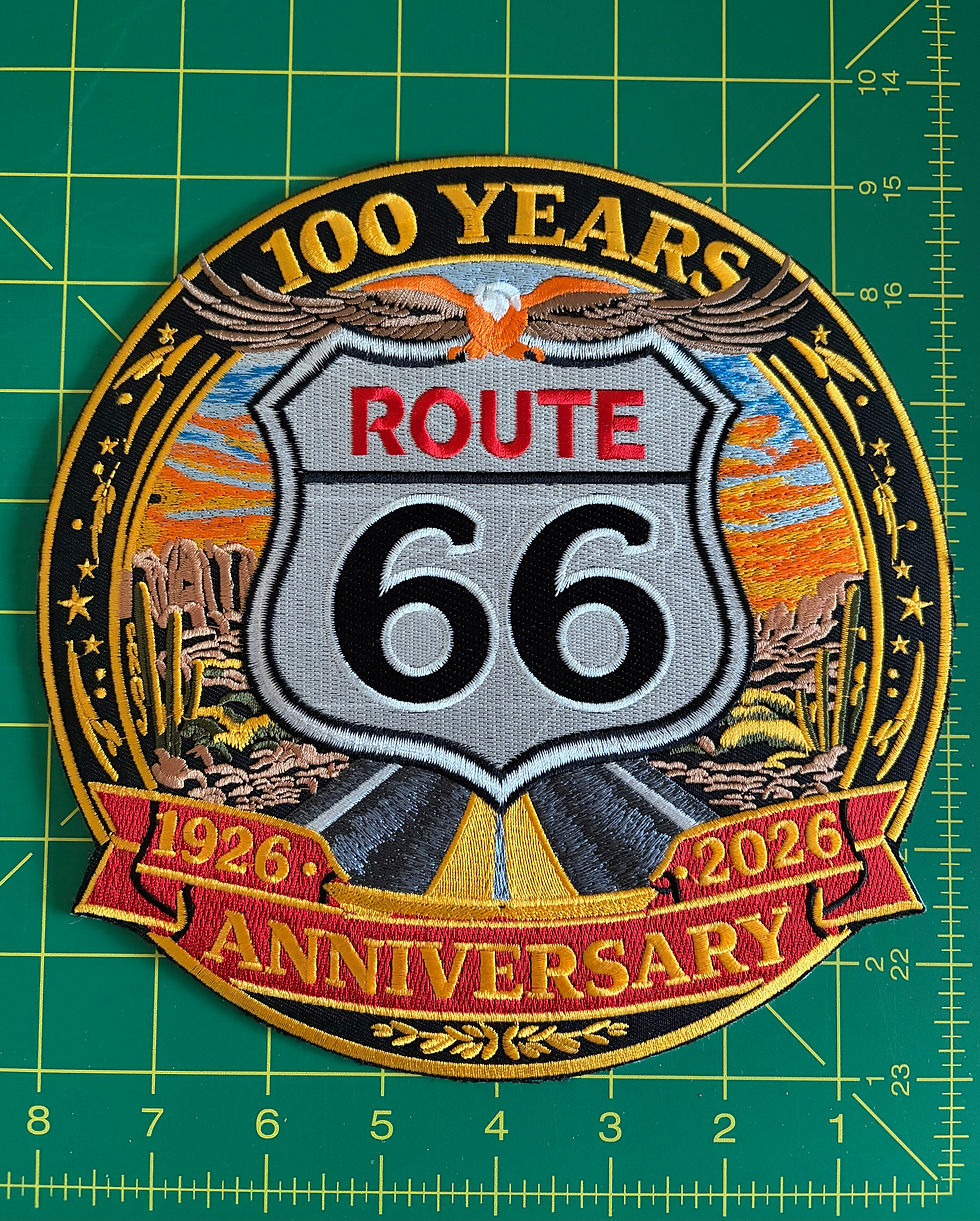
The 100th anniversary of Route 66 is officially this week (Wednesday, November 11th). There has been a year-long celebration that has provided an opportunity for many to see and feel the nostalgic vibe through eight states of the country. It was an amazing journey for us, especially on this centennial year. The hospitality was genuine, food in the diners was authentic, museums focused on local pride, community, memories and history. Travelers appeared to enjoy experiencing the Mother Road with other enthusiasts. For many first-timers, it is a bucket-list adventure. For others, it is more than a familiar two-lane highway. It is a calling—a passion to truly experience the sights, sounds, people, and flavors of the Mother Road.
Many of you have experienced Route 66—what is your favorite memory?
Thank you for stopping by.
XOXOX


Comments